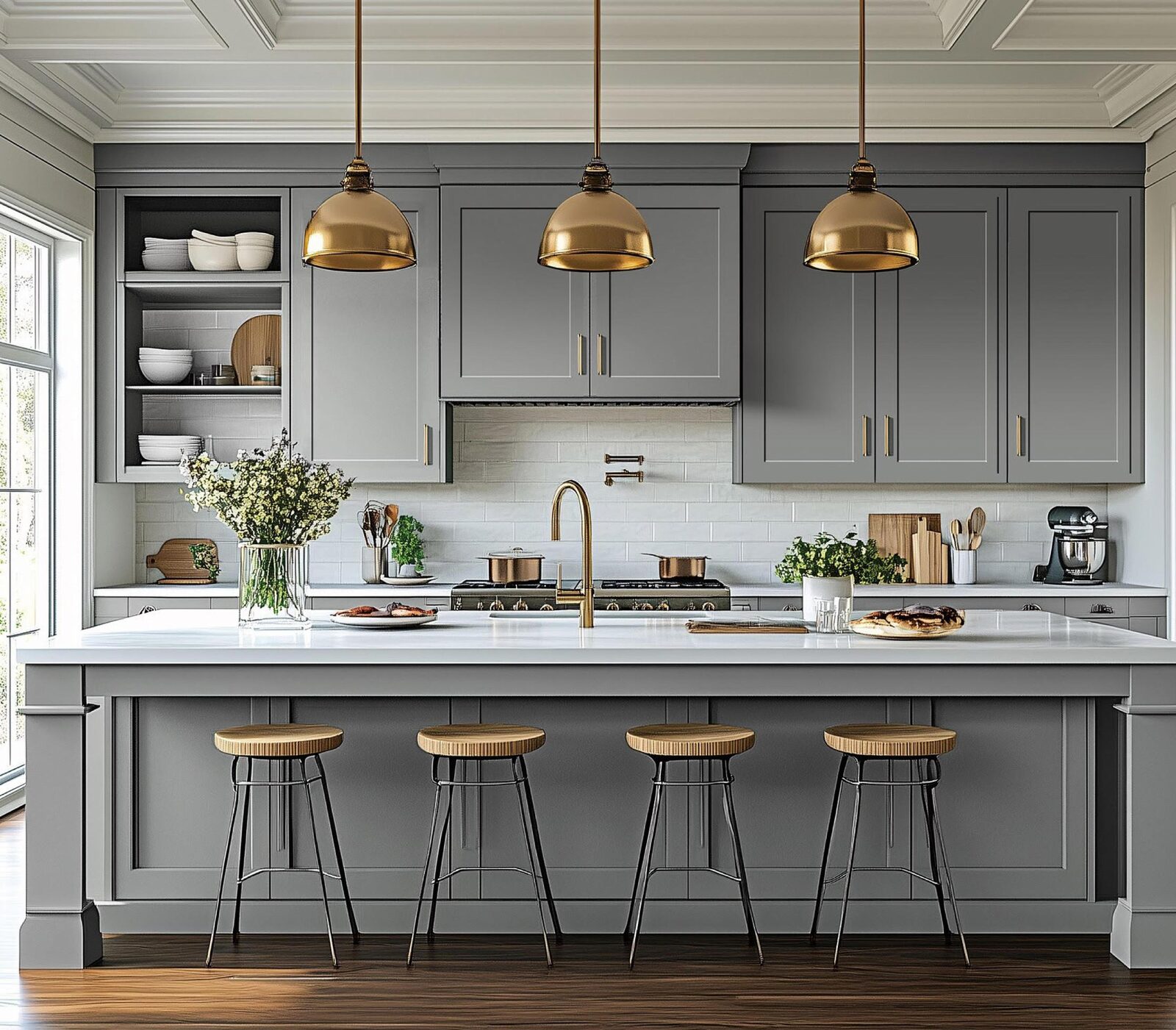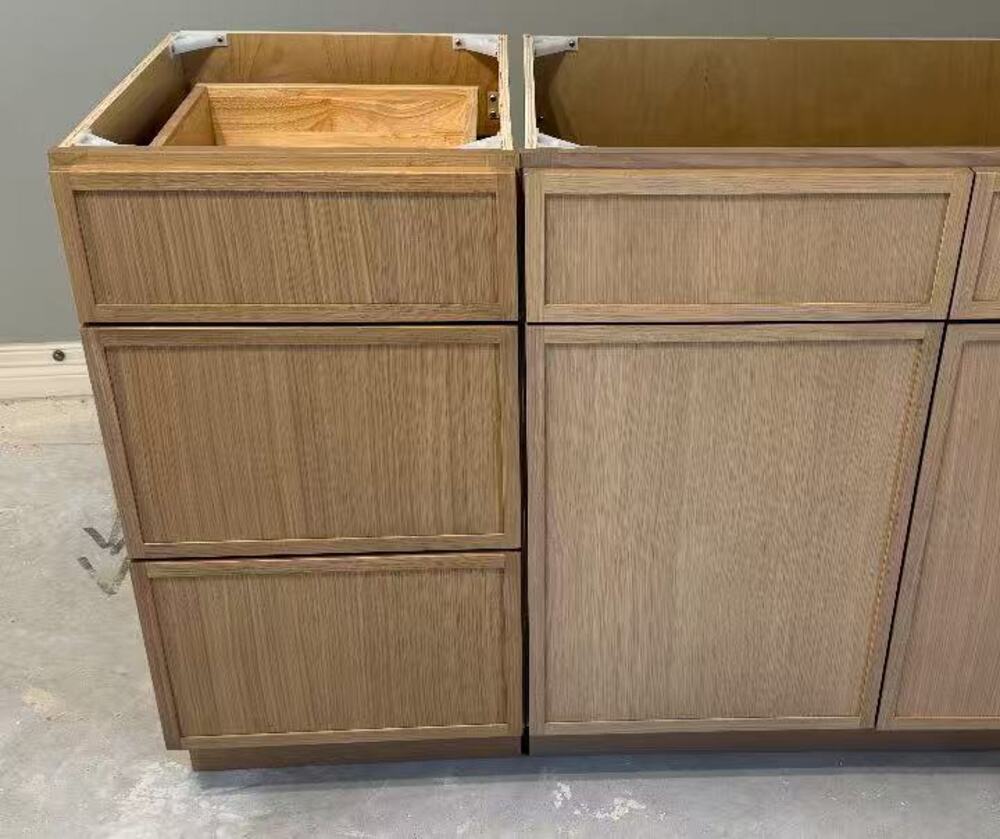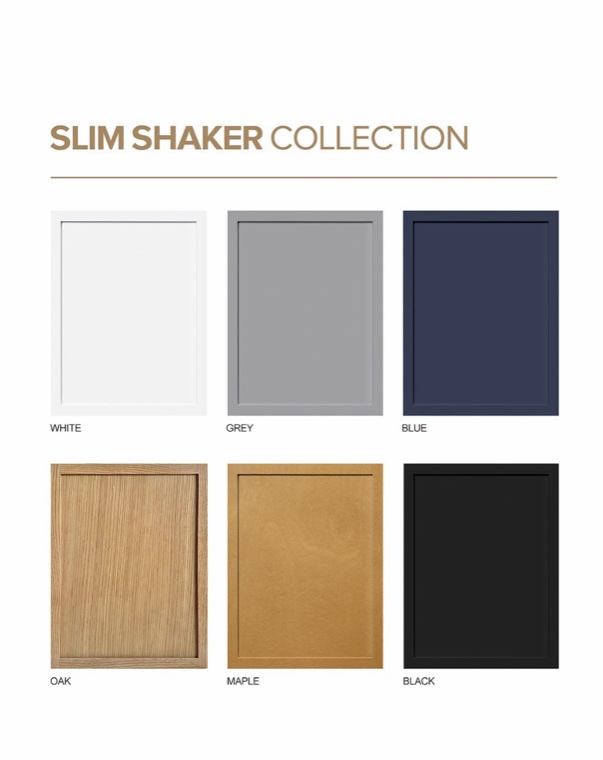
When you compare shaker vs slab cabinet doors, the short answer is this. Shaker suits most homes and most rooms. Slim shaker gives the same look with a lighter, more modern feel. Slab is the cleanest and simplest door, and it fits modern kitchens, closets and bathrooms best. Slab is also the easiest to wipe down. Shaker is the safer pick if you want the kitchen to look right for many years.
Below we cover how each door looks, how it cleans, what it costs you over time, and where we would use it.
What each door looks like
Shaker. A shaker door is made of a frame around a flat, recessed center panel. Bob Vila describes it as a five-piece design: a panel, two rails and two stiles. The lines are clean and square. It reads as classic without being fussy. It works in farmhouse, transitional and modern homes, in a neutral paint or a wood tone.
Slim shaker. This is the same idea with a narrower frame. The recessed panel is bigger and the border is thinner, so the door looks calmer and a bit more current. It sits between shaker and slab. If you like the shadow line of a shaker but find the standard frame heavy, this is the one to look at. You can see both frame widths on our doors page.
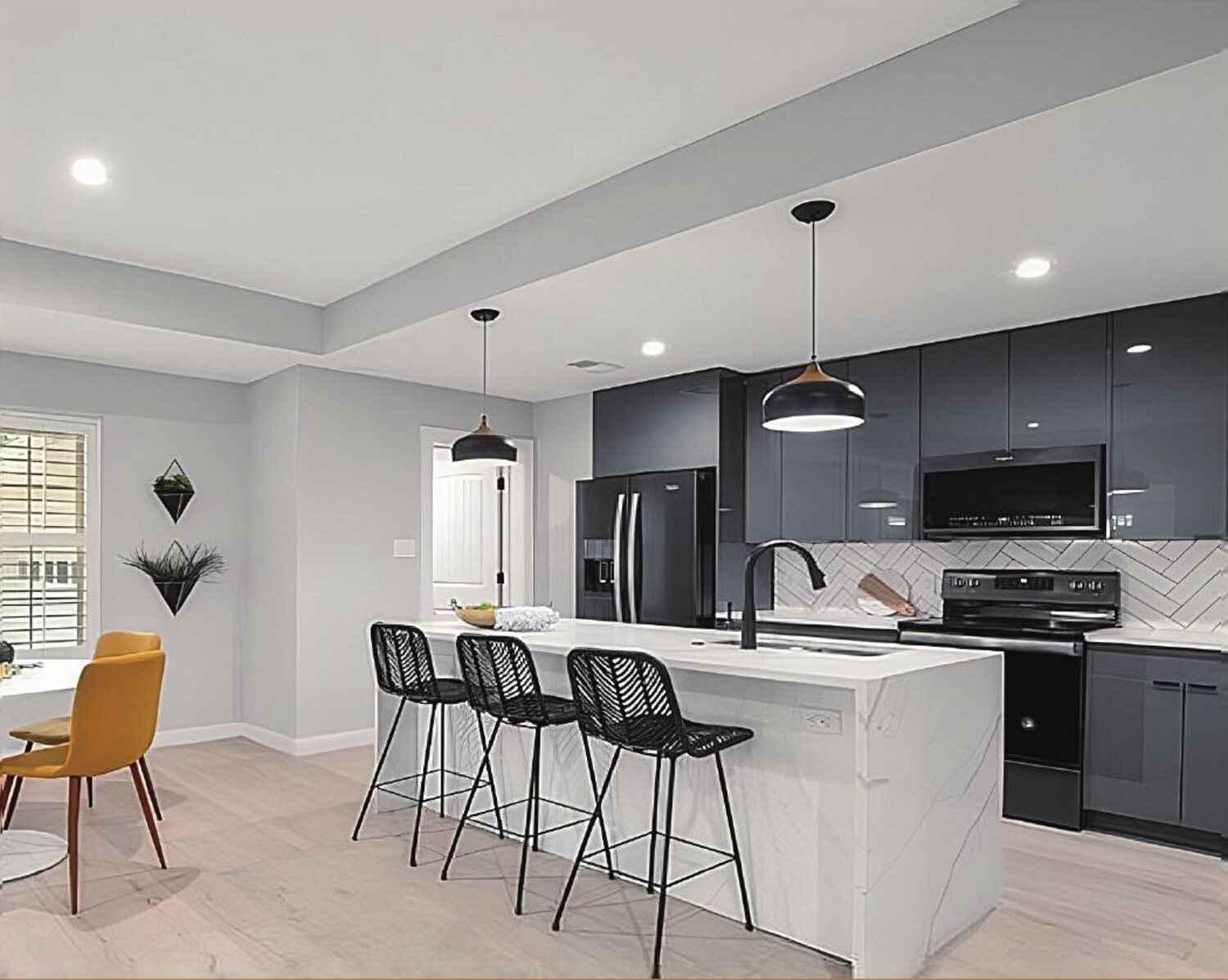
Slab. A slab door is one flat piece. No frame, no recess. Bob Vila says wood tones lean traditional on this profile, while bold paint gives a modern look. Slab works well with handleless or minimal hardware. It also puts all the attention on the finish, so a wood grain or a solid color has to be good.
Cleaning each door
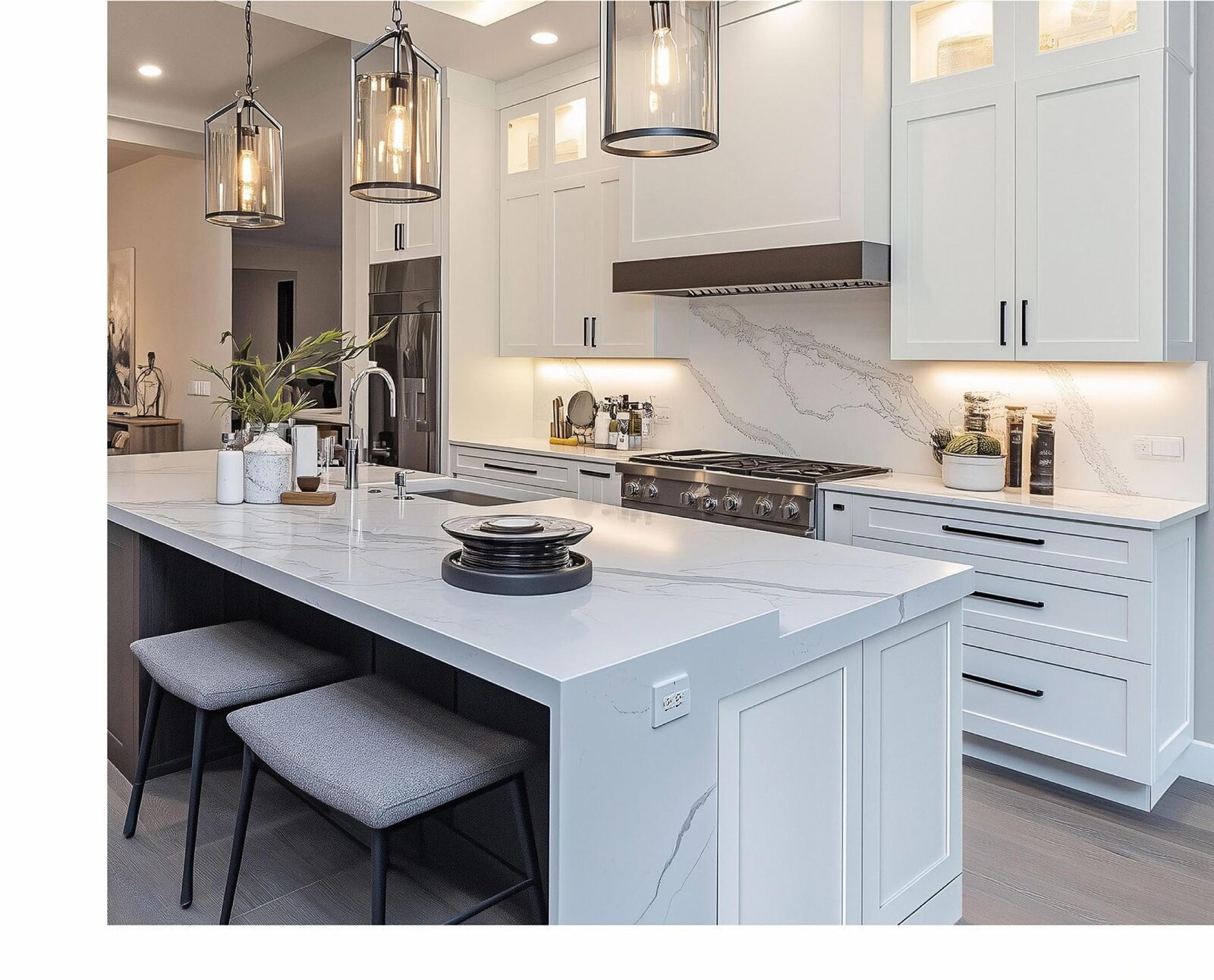
Slab is the easiest. Bob Vila calls the flat profile the easiest to keep clean, and it is easy to see why. There are no inside corners where grease and dust can settle. One wipe covers the whole face.
Shaker is still simple. Bob Vila notes that its plain design is easier to maintain than ornate styles. The only extra work is the inside edge of the frame, where the panel meets the rail. A soft cloth or an old toothbrush handles that. Slim shaker has a smaller recess, so there is a little less to reach.
The method is the same for all three, and it is the one Family Handyman describes:
- Put a few drops of dish soap in hot water.
- Wipe the doors from the top down, and rinse the cloth often.
- Scrub around handles and knobs, where fingerprints and grease build up.
- Wipe again with a clean, damp cloth to remove soap.
- Dry with a fresh microfiber cloth.
Do not skip the last step. Family Handyman warns that water left on the door can warp wood and laminate, and it can rust hinges. The same goes for every door style.
Cost of ownership
We do not quote prices in articles, and our standard price list is the same for everyone. So here is how to think about the cost over the years instead.
- Material matters more than profile. Bob Vila says the most affordable slab doors use thermofoil, melamine or laminate, and that overall cabinet cost depends on the profile, the material and the finish. A slab door in a high-end finish does not automatically cost less than a shaker door.
- Cleaning time. Slab saves a few minutes per wipe-down. Over a year this is small, but in a heavy-use kitchen near the stove it adds up.
- Wear and finish. A flat slab face shows everything: scratches, fingerprints, and any flaw in the finish. A shaker frame breaks up the surface, so small marks are less obvious. This is our experience and common advice, not a lab result.
- Style life. Shaker has stayed in use for a long time and fits many hardware and countertop choices. If you may sell in a few years, it is the lower risk choice. Slab is a stronger statement. It looks great when it matches the house and dated when it does not.
- Replacement. If a door is damaged, you want to be able to order the same one later. A plain shaker or slab door is easy to match from the same line.
Which room suits which door
Kitchen. Shaker is the default and works in nearly every layout. Choose slim shaker if the kitchen is modern but you want a bit of detail. Choose slab for a handleless, minimal or midcentury kitchen, or if you want the least cleaning near the range.
Bathroom vanity. Slab is a good fit. Bathrooms have steam and splashes, and a flat door dries off in one pass. Shaker looks fine too. Just keep the frame edges dry, because that is where water will sit.
Closets and wardrobes. Slab usually looks best for tall, wide runs, since there is less visual noise across a large wall. Shaker works if the bedroom is traditional.
Laundry and utility rooms. Pick on cleaning. Slab is the easier choice here, since lint and dust are the main issue.
Mixed rooms. You can use shaker in the kitchen and slab in a nearby pantry or laundry. Keep the color or wood tone the same so the two read as one design.
Where we come in
Design help is free. You send measurements and photos, or start your design on our site, and we draw the layout in 3D for you to check. You can swap the door style in the drawing and compare shaker, slim shaker and slab on your own layout before you order.
A few notes on how we work:
- Our cabinets are RTA, ready to assemble. We do not assemble or install them.
- Lead time is about 7 days. Shipping within the US then takes 3 to 7 days, depending on your location. For custom work we confirm the production time when the order is placed.
- Our cabinets are KCMA, CARB2 and TSCA Title VI certified.
- We ship from Houston and U.S. warehouses.
- On our shaker kitchen lines, the box is 1/2 inch cabinet-grade plywood with a UV-coated interior, and the drawer boxes are solid wood and dovetailed. On the frameless line, the box and drawer boxes are 3/4 inch plywood in white melamine.
To get started, send us the room measurements, a few photos, and the door style you are leaning toward. If you are not sure, send two and we will draw both. You can also browse the full range of kitchen cabinets.
Sources
- Kitchen Cabinet Styles - Bob Vila: Look, cleaning and material cost of shaker and slab
- How To Clean Kitchen Cabinets - Family Handyman: Cleaning steps and water damage warning