The best way to choose kitchen cabinet colors is to fix the things you can't change first, then test your short list in your own room. Start with the floor, the counters and the light. Pick the cabinet color last, and judge it from a large sample, in daylight and at night.
We talk to a lot of buyers about this. The steps below are the ones we would follow ourselves.
Start with what stays
Your floor and counters are usually the most expensive parts to change. Treat them as fixed and build the cabinet color around them.
- Floor: Decide if it looks warm (yellow, red or orange in it), cool (grey or blue in it) or neutral. Wood floors are often warm. Grey tile is often cool.
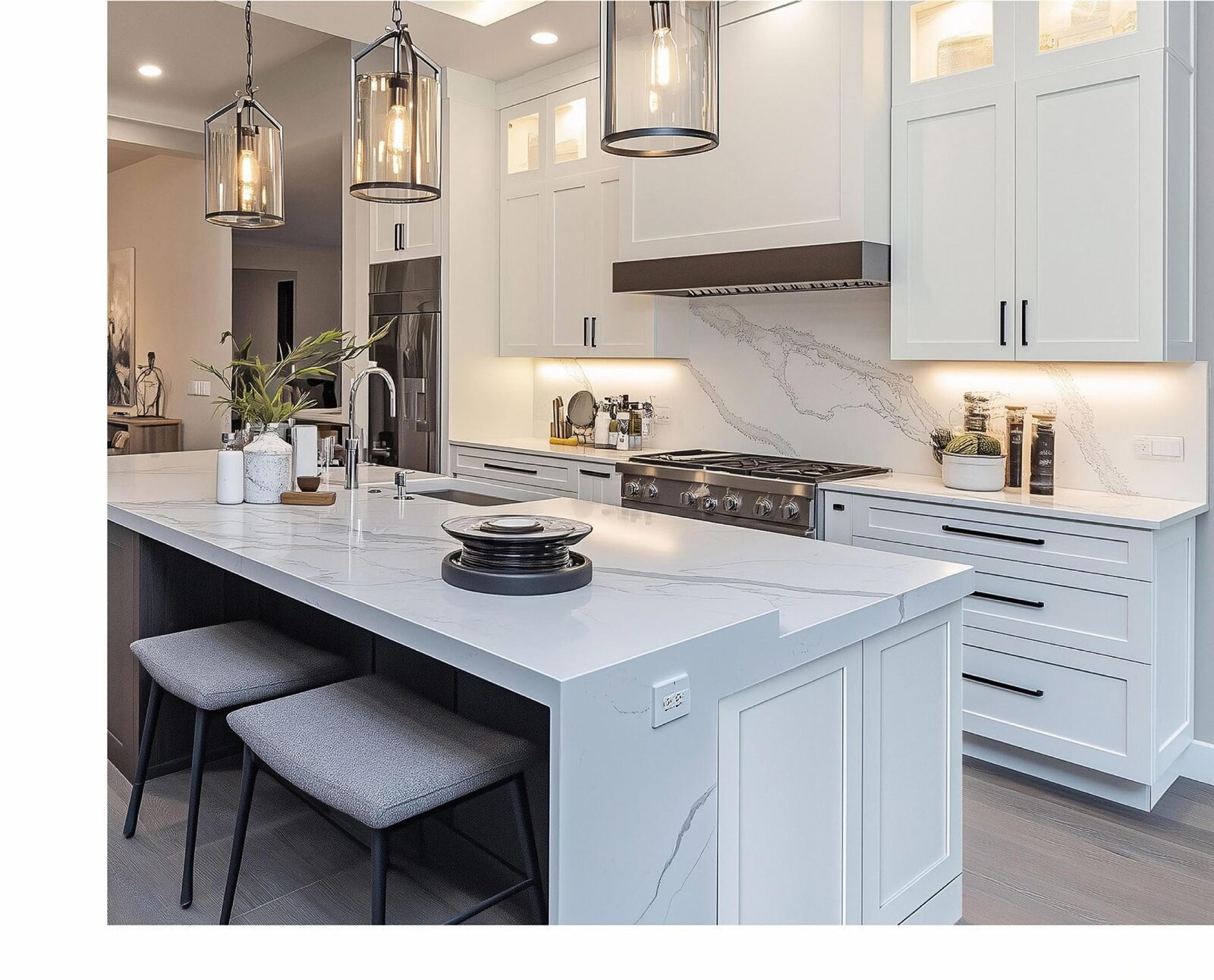
- Counters: Look at the base color and any veining. If the stone has strong, busy veining, keep the cabinets quiet so the two do not compete.
- Backsplash and walls: These are cheaper to change, so they can follow the cabinets.
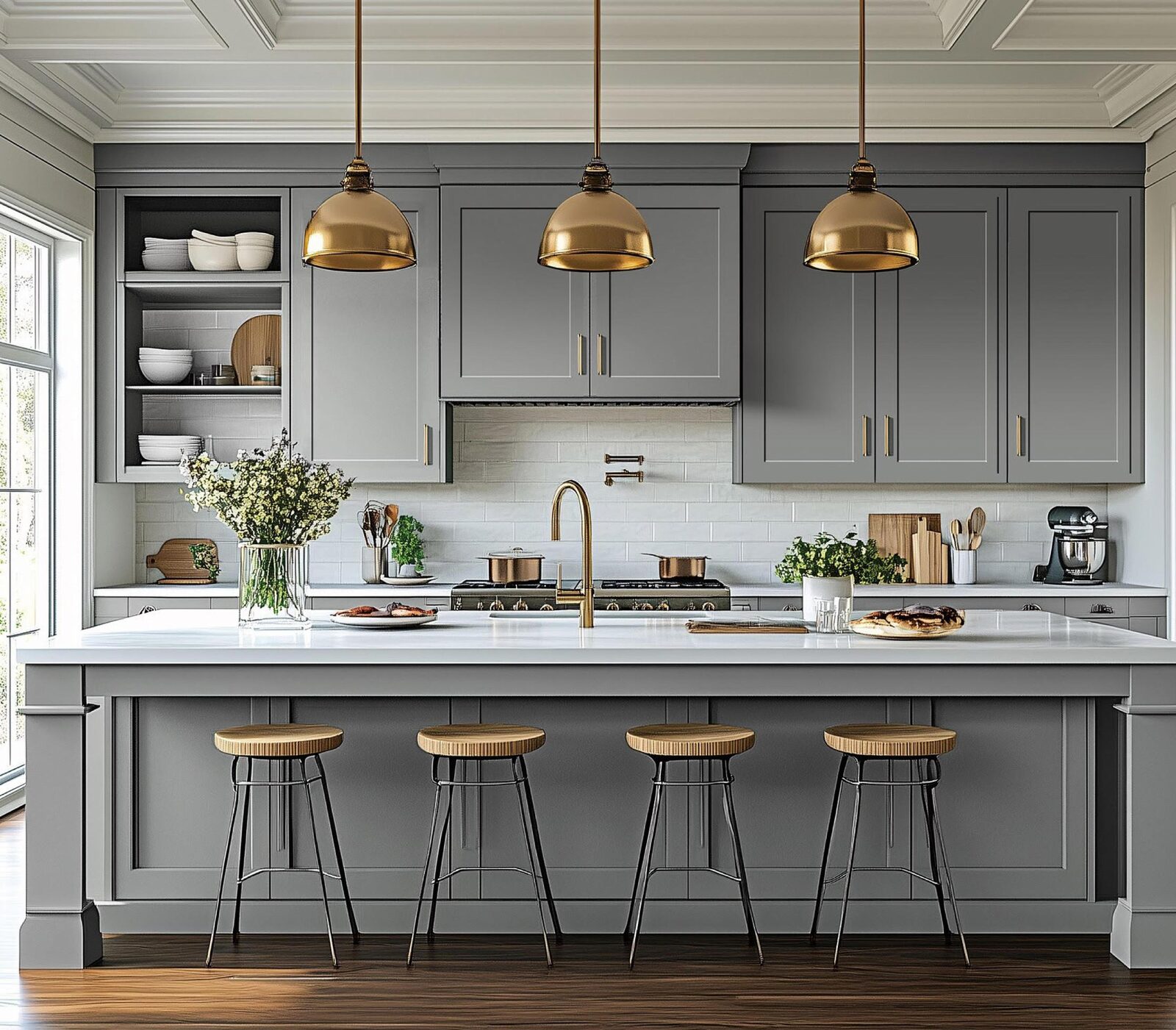
A simple rule works well. Keep the undertones in the same family. Warm cabinets with a warm floor look settled. A cool grey cabinet next to a yellow oak floor often looks off, even when each one looks fine alone.
You also want some contrast. If the cabinets and the floor are nearly the same shade, the room can look flat. A lighter cabinet over a darker floor, or the other way around, gives the eye something to sort out.
Read the light in your room
The same color looks different from one kitchen to the next. Sherwin-Williams ties this to the direction the room faces.
- North-facing: Little light, and it has a cool cast. Warm neutrals and colors with warm undertones help. A higher light reflectance value (LRV) keeps the room from feeling dark.
- South-facing: Steady, warm light all day. Most colors work. Very warm shades can feel too strong at some hours, and cool tones read closer to neutral.
- East or west-facing: East rooms are warm in the morning and cool later. West rooms are the reverse. Choose for the hours you use the kitchen most.
LRV is a 0 to 100 scale of how much light a color reflects. A light cabinet has a high number. A deep navy or charcoal has a low one. A low number is not wrong, but it asks for more light in the room.
Time of day matters too. Sherwin-Williams notes that morning light is warm and yellowish, midday light can make colors look cooler and washed out, and late-day light is warm and reddish.
Check the bulbs and the sheen
Your kitchen lights change the color as much as the sun does. Sherwin-Williams lists how common bulbs act:
- Incandescent bulbs add yellow warmth. They push warm colors stronger and dull cool ones.
- Cool fluorescent bulbs bring out blues and greens and mute warm tones.
- Halogen bulbs give a bright white light close to sunlight.
- LEDs vary. Check the label before you judge a color under one.
Sheen changes things as well. The levels go from flat to satin to semi-gloss to gloss. Glossier finishes can make a color look richer and brighter, and the color can shift as you change your viewing angle. Lower sheens look softer.
If you plan to add under-cabinet lighting, test your sample with those lights on. They hit the door from an angle that daylight does not.
How to judge samples
A small chip tells you very little. Use this routine.
- Go big. Use a white foam board you can move around, and cover it in your sample color. Benjamin Moore suggests this so you can carry the color through the room.
- Put on two coats. Benjamin Moore advises at least two layers for an accurate color.
- Move it. Hold it where the cabinets will go, then near the window, then by the stove wall. Shade changes from one spot to the next.
- Look all day. Check morning, midday, evening and after dark, with natural and artificial light both.
- Hold it next to the floor and counter. Lay a piece of the counter or floor beside it. Do not judge the color alone.
- Keep a white background. A plain white or light surface behind the sample keeps nearby colors from fooling you.
- Wait a day. Come back the next morning. First reactions often change.
Narrow the list to two colors before you test, not six. Too many boards in one room makes every one of them look wrong.
Door style changes the color too
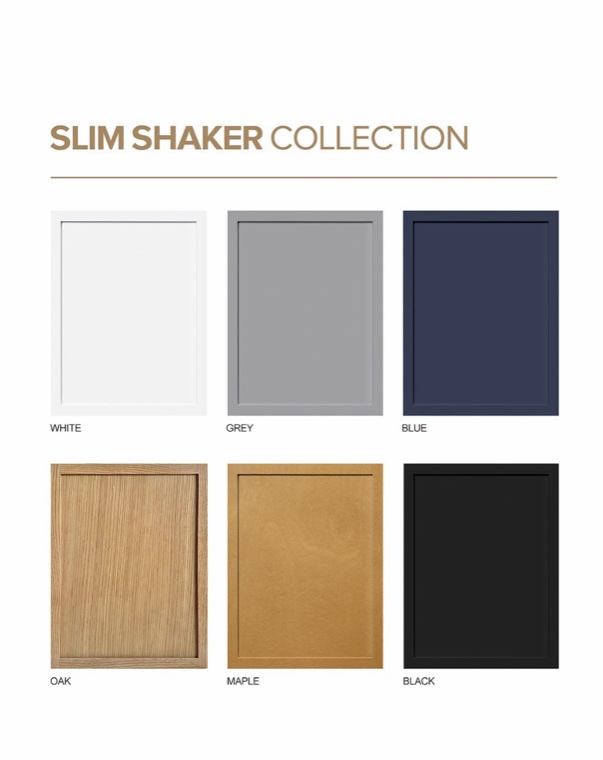
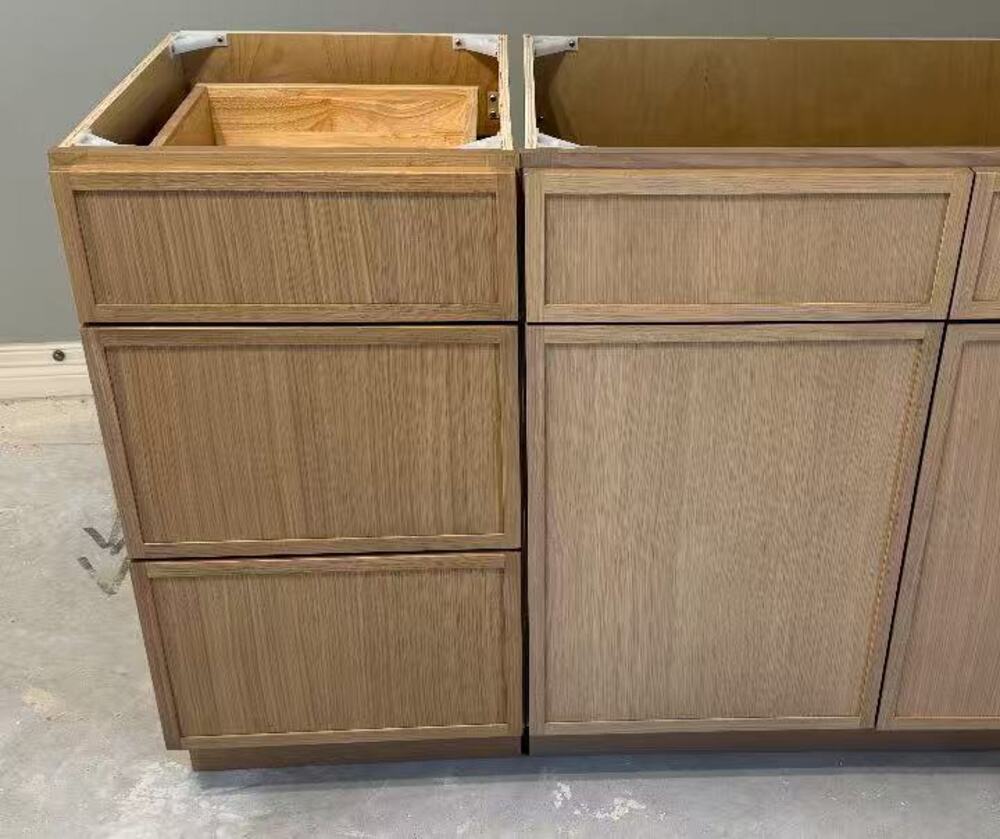
Flat doors show color evenly. Doors with panels and edges, like a Shaker style, throw small shadows, so the same color looks a little deeper in the grooves. You can compare door styles on our doors page and look through the kitchen cabinets range to see how colors sit on different fronts.
Where we come in
Design help is free. You send measurements and photos, or start your design on our site, and we draw the layout in 3D for you to check.
To help us, send these:
- Room measurements and a few photos of the kitchen.
- A close photo of your floor and one of your counters, taken in daylight.
- Which way the main window faces, if you know.
- The two or three colors you are weighing.
Our cabinets are RTA, ready to assemble. We do not assemble or install them. Lead time is about 7 days. Shipping within the US then takes 3 to 7 days, depending on your location. For custom work we confirm the production time when the order is placed. Take your time with the color testing before you order.
Sources
- Choosing Color Based on Room Orientation (Sherwin-Williams): north, south, east, west light and LRV
- How Light & Finish Affect Paint Color (Sherwin-Williams): time of day, bulbs, sheen
- How to Use Paint Color Samples (Benjamin Moore): sample board, two coats, all-day testing